

Most clinical software is built around the visit. A patient comes in, something is documented, a charge is created, and the next visit is another row. Hospice does not work that way, and the agencies that try to run it on visit-shaped software discover the difference at their first Medicare audit.
A hospice episode begins with an election and ends thirteen months after a death. In between, it is governed by clocks: certification, benefit periods, recertification, the face-to-face requirement, the fifteen-day plan-of-care cycle, the fourteen-day aide supervision, the five-day notice filing. Miss one and the episode is unbillable from that date, regardless of how good the care was. The visit is the least important object in the record. The episode and its clocks are the point.
This post is about how HealthPlex Hospice and Palliative Care models the episode, why the interdisciplinary group is the governing loop rather than a meeting, and how palliative care runs on the same structure under a different benefit.
The episode and its clocks
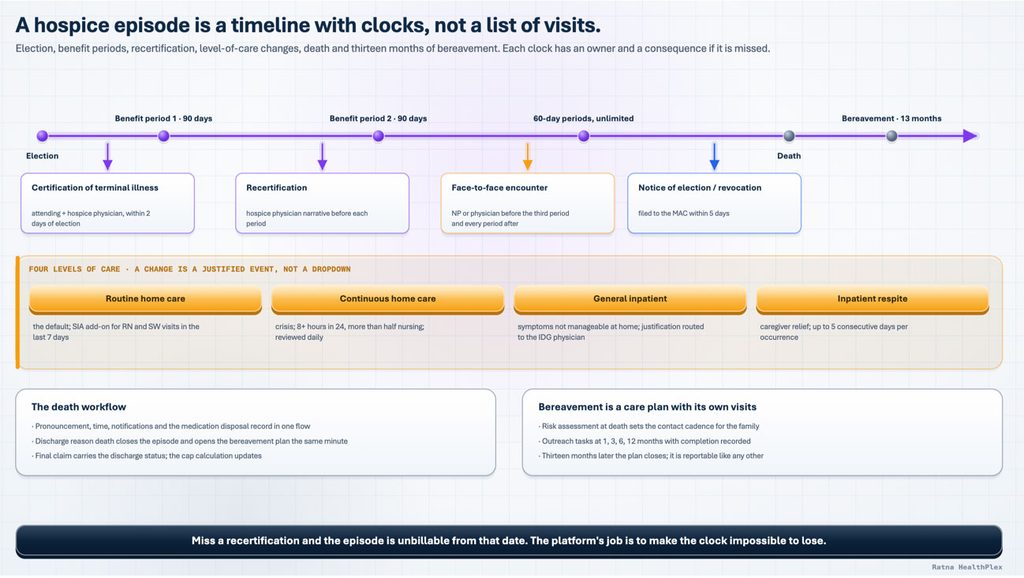
Figure 1: A hospice episode is a timeline with clocks, not a list of visits.
Election starts everything. The patient or representative signs the election statement, waiving curative treatment for the terminal condition, and the notice of election has to reach the Medicare contractor within five days or the days before it arrives are lost. The platform generates the notice from the election record and tracks the filing as a task with a clock, because the consequence of missing it is arithmetic, not judgement.
Certification of terminal illness follows: the attending physician and the hospice physician each certify a prognosis of six months or less, within two days of election. The first two benefit periods are ninety days; every period after that is sixty, without limit. Before each new period the hospice physician recertifies with a narrative, and from the third period onward a physician or nurse practitioner must have seen the patient face-to-face in the window before the period begins.
Each of these is a clock on the episode, and the platform shows them as days remaining rather than dates. A case manager opening the chart sees “recertification due in 9 days, face-to-face not yet documented” without doing the calculation. The task fires early enough to schedule the visit, and the claim for the next period is held until the documentation exists.
Levels of care are justified events
Hospice has four levels of care and one of them is the default. Routine home care is where nearly every patient lives, with a service intensity add-on for registered nurse and social worker visits in the last seven days of life. The other three are changes that need a reason.
Continuous home care is a crisis: eight or more hours in a day, more than half of it nursing, reviewed daily because it does not persist. General inpatient care is for symptoms that cannot be managed at home, and the justification goes to the hospice physician before the level changes, not after. Inpatient respite gives the caregiver relief, up to five consecutive days per occurrence.
In visit-shaped software, level of care is a dropdown on the visit. In HealthPlex it is an event on the episode with a justification, an approving physician and an effective date, and the claim for those days carries the level the event set. The audit question “why was this patient on general inpatient care for six days” is answered by the event, not by reconstruction.
The death workflow and the thirteen months after
The death of a patient is the one event every hospice handles every week and most software handles badly. Pronouncement, time of death, notifications to the physician and the family, disposal of controlled medications with a witness, discharge with the reason “death”, the final claim with the correct discharge status, and the update to the aggregate cap calculation. HealthPlex runs these as one flow, because a nurse at a bedside at two in the morning should not be navigating five modules.
The same minute the episode closes, the bereavement plan opens. Bereavement is not a courtesy call; it is a care plan for the family with its own risk assessment, its own contact cadence and its own visits, and it runs for thirteen months after the death. Outreach tasks at one, three, six and twelve months are recorded with completion, a high-risk assessment increases the cadence, and the plan is reportable like any other. Surveyors ask for it. The platform can show it.
The interdisciplinary group is the governing loop
Regulation requires the interdisciplinary group to review and update each patient’s plan of care at least every fifteen days. Most agencies treat that as a meeting to get through. It is better understood as the control loop of the whole episode.
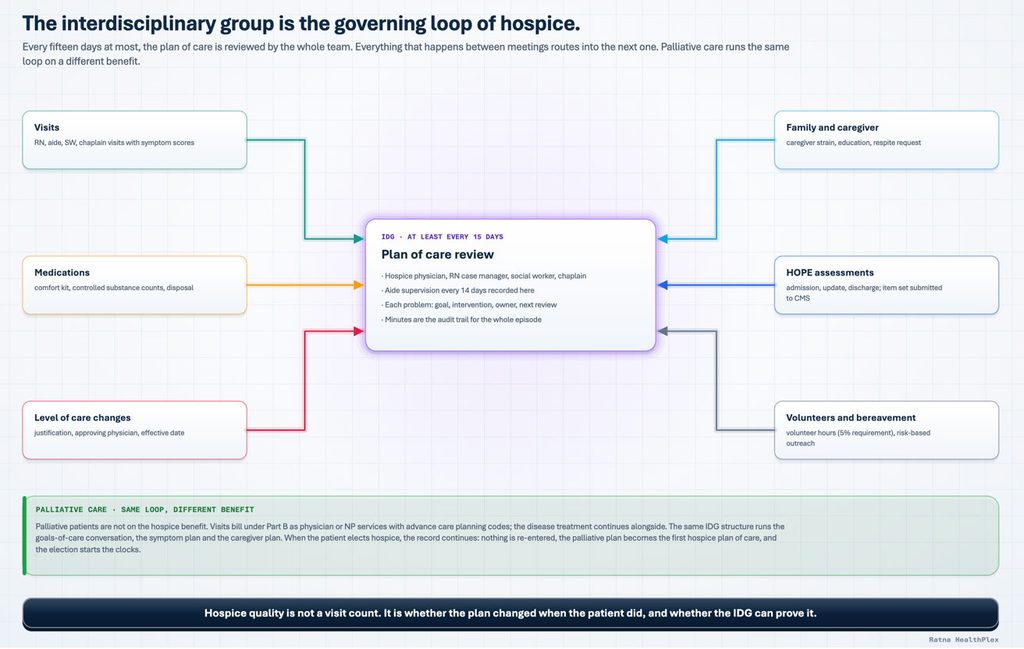
Figure 2: The interdisciplinary group is the governing loop of hospice.
Everything that happens between two IDG reviews routes into the next one. Nursing, aide, social work and chaplain visits with their symptom scores. Medication changes, comfort kit use and controlled substance counts. Level-of-care changes with their justifications. Caregiver strain, education delivered, respite requests. The HOPE assessments that replaced the Hospice Item Set, at admission, at update and at discharge, submitted to CMS. Volunteer hours, which have to reach five percent of patient care hours, and bereavement outreach.
The IDG record itself is structured: for each problem, a goal, an intervention, an owner and a next review date. Aide supervision every fourteen days is recorded there. The minutes are the audit trail for the episode, and because the inputs arrived as events on the episode, the platform pre-populates the review with what changed since the last one. The team spends the meeting deciding, not reading.
Hospice quality is not a visit count. It is whether the plan changed when the patient did, and whether the IDG can prove it.
Palliative care: same loop, different benefit
Palliative care patients are not on the hospice benefit. They are still receiving treatment for their disease, and palliative visits are billed under Medicare Part B as physician or nurse practitioner services, with advance care planning codes where the conversation happens. There is no election, no benefit period and no cap.
But the clinical structure is the same. Goals-of-care conversations, a symptom plan, a caregiver plan, a team that reviews them. HealthPlex runs palliative care on the same interdisciplinary loop with the hospice clocks switched off and the Part B billing rules switched on, which is a configuration difference and not a different product.
The reason that matters is the transition. When a palliative patient elects hospice, nothing is re-entered. The record continues, the palliative plan becomes the first hospice plan of care, and the election starts the clocks. The family does not tell their story again to a new intake nurse on the worst week of their lives.
Field reality
Hospice happens in homes, and homes have poor connectivity. The field application for nurses and aides is built offline-first: visits are documented on the device, electronic visit verification captures time and location where the state requires it, and the record synchronises when the connection returns. A sync conflict, where a visit was edited in the office while the nurse was offline, is resolved field by field with both versions retained. A nurse’s note is never silently overwritten by an office edit.
Four questions for a hospice vendor
- Open a patient in their third benefit period. Where is the face-to-face documented, and what happens to the claim if it is missing?
- Change the level of care to general inpatient. Who approved it, when, and where is the justification?
- A patient died at 2 a.m. Walk me through the next twenty minutes on the nurse’s phone.
- Show me the IDG review for a patient whose caregiver reported strain last week. Was it already on the agenda?
A hospice platform is one that has an answer for all four without leaving the episode.

CTO and ChiefArchitect, RatnaGlobalTech.